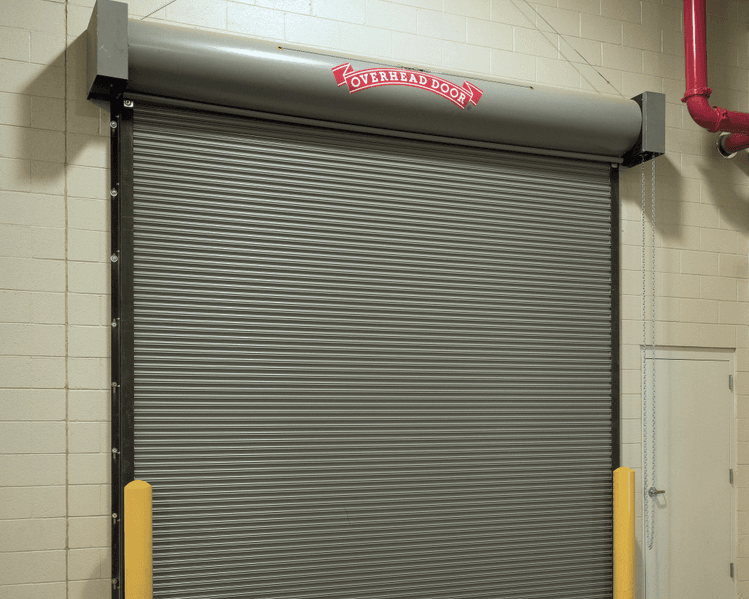
Fire Door Inspection
Annual NFPA 80 inspection and drop testing to keep your fire doors compliant, working, and documented.
What Is Fire Door Inspection?
A fire door is part of a building's passive fire protection. In a fire it compartmentalises the space, holding back flame and smoke long enough for people to get out and for the fire service to work. NFPA 80, the Standard for Fire Doors and Other Opening Protectives, sets out how those doors must be installed, inspected, and maintained, and most Authorities Having Jurisdiction enforce it directly.
Annual inspection is the requirement that catches most building owners, and it is the core of this service: inspection, the repairs that follow from it, reset after a door has activated, and the documentation that proves the work was done.
An inspection covers the door, the frame, the hardware, the glazing, and the clearances. The rating label has to be present and readable. Perimeter and bottom gaps are measured against the allowable tolerance — no more than one-eighth of an inch around the perimeter and three-quarters of an inch at the bottom. Every piece of hardware is operated, the self-closing device has to shut the door and latch it, and the assembly is checked for field modifications that would void the rating. Any door with an automatic closing mechanism, whether a fusible link or an electromagnetic hold-open, gets a drop test: the hold-open is released and the door must close and latch under its own weight with no help.
The faults that turn up most are misalignment, damaged smoke seals and intumescent strips, worn or broken hardware, gaps outside tolerance, and self-closers or coordinators that have stopped working correctly. Alignment and frame problems are corrected, seals and intumescent material replaced, hardware repaired or swapped, and closers and coordinators readjusted so a pair of doors closes in the right order. Where a door has activated or been damaged, the sequence runs inspection, documentation, repair or replacement, then a re-test before the door is signed off.
Each inspection produces a written record: the condition of every assembly, the deficiencies found, the repairs carried out, and the final pass or fail. That record is what gets presented at a fire inspection, and keeping it current year to year is the difference between routine compliance and a scramble.
CONFIDENCE DROP TESTING MUST BE COMPLETED BY A TRAINED AND CERTIFIED TECHNICIAN
Keep your garage door in compliance with the National Fire Protection Agency. Overhead Door™ can perform annual fire door inspections on your fire doors to ensure all requirements are met. That is why we have our technicians are trained and certified in both commercial rolling steel and commercial fire doors.
We Ensure Your Fire Doors are Up to Standard
According to the National Fire Protection Association
“All horizontal or vertical sliding and rolling fire doors shall be inspected and tested annually to check for proper operation and full closure. Resetting of the release mechanism shall be done in accordance with the manufacturer’s instructions. A written record shall be maintained and made available to the authority having jurisdiction.”
Our team of certified garage door technicians will perform the following for every inspection:
Fire Door Inspection — Services & Options
- ✓Drop test the garage door to ensure proper operation and dropping speed
- ✓Perform any planned maintenance that may be required
- ✓Solve any noncompliant issues or conditions
- ✓Document all testing and repair that were completed to Tegris Fire™
- ✓Place a tag on the garage door to indicate it is fully compliant and up-to-date
Common Questions About Fire Door Inspection
How often does a fire door have to be inspected and drop tested?
Once a year. NFPA 80 requires that all horizontal or vertical sliding and rolling fire doors be inspected and tested annually to check for proper operation and full closure. The written record of that test can be asked for by the authority having jurisdiction, which is a good reason to hold the inspection to roughly the same point each year rather than letting the interval drift.
What actually happens during a drop test?
The door's automatic release is triggered so that the door closes under its own weight without assistance, and two things are judged: whether it comes fully closed, and whether it descends at the correct dropping speed. A door that has been dropped then has to be reset correctly before it will protect the opening again, which is why the drop and the reset are treated as one piece of work rather than two.
How is a fire door reset after it has dropped?
Resetting of the release mechanism is done in accordance with the manufacturer's instructions, so the procedure follows the hardware on the door rather than one universal method. On Overhead Door™ rolling steel fire doors, the Fire Minuteman™ Chain Reset Hoist is designed to eliminate the need to release the door's spring tension in fire drop mode, and allows one person to reset the door from the floor. Where a Fire Sentinel® release is fitted, floor-level testing, reset and trouble indication are available as well.
What does the Fire Sentinel® release device do?
The Fire Sentinel® is a UL-listed, time-delay door release device that directs a fire door's closure in an emergency situation, giving an added measure of control over how the door comes down. The delay on alarm is 10 seconds as standard, optionally up to 60 seconds where the authority having jurisdiction allows it. The device comes in 120V AC or 24V DC for motorized or non-motorized doors, battery back-up is included on the FSBX and FSCX models, LED status lights confirm the unit is operating, and it is UL 864 and NFPA 72 compliant. An intelligent operation feature recognizes when the door is already closed and inhibits release, which prevents time-consuming resets and damage to the release mechanism.
What does the label on a fire door tell me?
The label records the rating the assembly was listed for, and that rating depends on the wall the door is installed in. Overhead Door™ fire doors carry UL or FM labels and are listed for both masonry and non-masonry applications, including installation to wood or steel jambs within drywall. To show how the two differ: the FireKing™ insulated rolling fire door is available with labels up to four hours for masonry and three hours for non-masonry walls, while the 640 and 641 Series counter fire doors are labeled with either a 3-hour Class A rating for masonry applications or a 1-1/2-hour Class B label in non-masonry fire walls. Part of the inspection is confirming that the label is still present and legible.
What documentation comes out of an inspection?
NFPA 80 calls for a written record to be maintained and made available to the authority having jurisdiction, so the paperwork is part of the job and not an add-on. All testing and repair that was completed is documented to Tegris Fire™, and a tag is placed on the door to indicate that it is fully compliant and up to date.
Need help with Fire Door Inspection? Call us today.
(360) 734-5960Request a Fire Door Inspection Estimate
Fill out the form below and we'll get back to you within one business day.